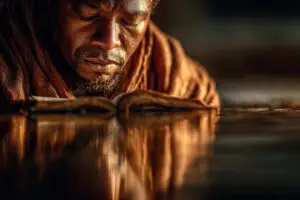
“O Lord, open my lips,and my mouth will declare your praise. For you will not delight in sacrifice, or I would give it; you will not be pleased with a burnt offering. The sacrifices of God are a broken spirit; a broken and contrite heart, O God, you will not despise. 1
Too many days we see news of abuse, one destroying another, one raising themselves up by lessening another. That is not what is in today’s scope.
David has his life open before us in the Bible—we know his roots, his growth, his humility, his successes and his failures. Even more, we read his relationship with his Lord. Psalm 51 is a laying-open of his response to God and the keys to his closeness.
By the Kingdom Age of the Jews, law and tradition were established beyond the expectations of God. What had been meant to draw His people closer to Him had become rote tending to thoughtlessness, the mere repetition of practices without involvement of the inner being. Depth was often replaced with ritual.
At the center of Jewish life was the sacrifices. Bring to God the best of your herd or production, celebrate the occasion and get back to daily life. The annual feasts and festivals were celebrations but you didn’t live celebrating God. King David wrote this song after his life had years on it and he had become aware that there was more to relationship with God than giving Him stuff, that what the Lord truly wanted was continuing participation toward Him from the inner heart, not physical but soul and spirit.
Sacrifice is that which is given to God, which costs the giver and is left with God. There is an investing in the continuing relationship and an openness in looking for His acceptance of the sacrifice. It is given not because He needs it but because we need to count the cost of living open before Him. While we often think of the sacrifices being burnt animals upon the altar, David has realized God desires ‘more’ than fired meat. God is looking for the open heart of those who would sacrifice to Him.
The brokenness is not what we think of where the body and personality of one is the victim of an abuser but rather the changing of state to be open to the desires of the Greater. David is admitting to God that David’s resolve to do what David wants has been processed by life to the point he has realized holding all the pieces for his own purposes is not sufficient for him to relate to his Lord. Brokenness is our not being able to hold all the pieces together to make ourselves who we want. The second element is being contrite of heart, the willingness to allow the Lord to assemble our pieces according to His intentions rather than ours.
There is a transformation that becomes possible by submitting who we see ourselves as into the care and use of God to create us in His image rather than our own. David’s realization comes that mere outward sacrifices do not fulfill the desire of God for intimacy between us and Him but that openness with all the pieces of who we are given to God is the acceptable sacrifice before God. Living with our pieces in God’s hands, His strength composing the new person, seeing ourselves as less without Him holding us as His.