
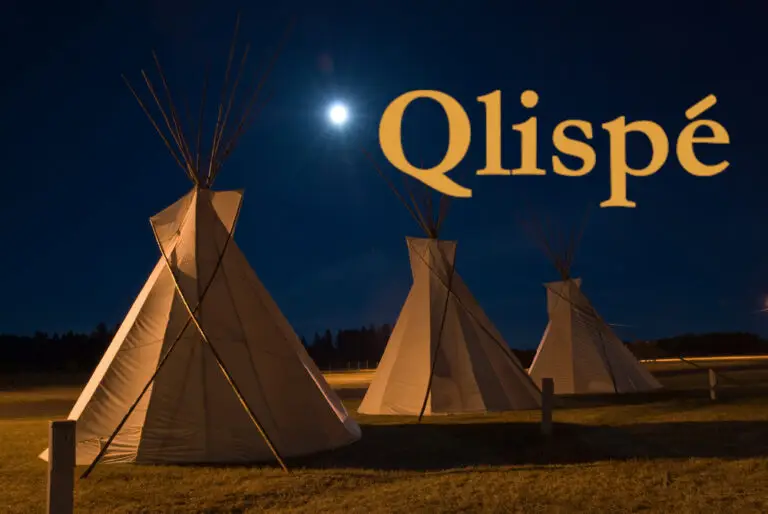
In the Kutenai tongue the name is actually Qlispé but has been twisted in the English colonial tradition making it Kalispell.
Before the first white men explored the continent, the natives had thrived for millennia. While they tended to be nomadic — following the food sources — some of the tribes settled in select regions. It was only with tribal growth and native wars for territory and resources and then the arrival of Europeans with their bent for conquest and colonizing that the natives were driven west in great numbers. While some of the southern tribes were more aggressive toward other tribes, the great migration west was driven by the move of the French-Canadians and the Colonials into the Northwest Territory (not continental northwest but northwest of colonies, what we call the upper Midwest, Ohio River Valley) that greatly impacted Montana. Tribes like the ancestors of the Blackfeet were pushed out of the upper Midwest and migrated into Canada and across the Plains of Saskatchewan and Alberta before moving back south into northern Montana. Another branch of the Blackfeet who identify as the Niitsitapi nation were pushing the Kalispel nation west from the Great Plains through Montana and then into the northern parts of what became Idaho.
The Kalispel tribe had diminished to 375 natives by 1875 and continued to be pushed off tribal lands by white settlers filing claims under the Homestead Act. By second half of the Twentieth Century, the Kalispels were clustered in Pend Oreille County, Washington and the Kalispel Reservation had almost doubled in size from the original parcel “given” to the Tribe by the United States in 1914; the original reservation of 7 square miles has added another 4 square miles through purchases from tribal resources and then expanded that with another 5-1/2 square miles in northeast Washington and northern Idaho.
The Kalispel have made strides in reclaiming their heritage. In 1991, the Tribe committed to its first Vision Statement to recognize their heritage and take deliberate steps to pass the heritage, traditions and culture on to future generations. Initiatives were acted upon to educate in the Kalispel history as well as prepare the People for success in business and economic opportunities. They have since created more than a dozen tribal business which employ tribal and others as well with substantial opportunities. They have also been the major force in a rebirth of preserving the Salish language and have created a model for other Salish-speaking tribes.
The Kalispel Indian Reservation is headquartered in Usk, Washington just west of the Pend Oreille River and 50 miles north of Spokane but they also have a strong business presence in Airway Heights just west of Spokane.
This overview of Qlispé has been prepared from common sources of history but has been confirmed through Tribal resources available at: https://kalispeltribe.com/our-story